


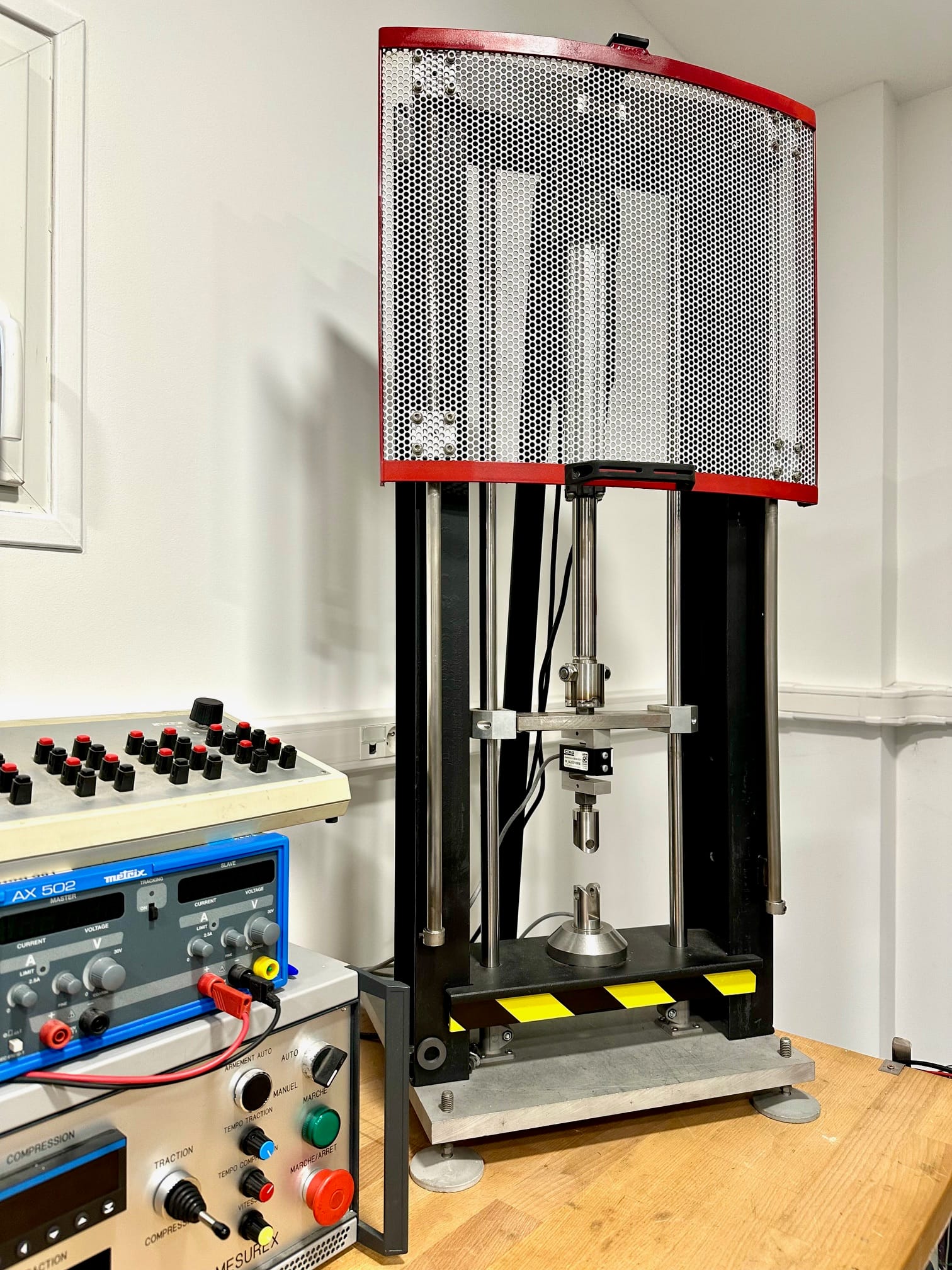
To ensure optimum results, several criteria must be defined prior to calibration:
- Equipment identification force transducers (dynamometers, load cells, etc.), associated instrumentation and cables.
- Direction of load : traction (pull-out/elongation test...), compression (crush resistance, hydraulic system testing, etc.), or both (applications with rapid force variation, such as automotive or industrial machinery testing).
- Mechanical interfaces : nature and characteristics of adapters used.
- Calibration range minimum/maximum forces applied.
- Loading mode : increasing loads only or increasing and decreasing loads.
- Loading conditions :
- Possible preloads
- Waiting time for stabilization
- Relaxation time between series
- Precision required precision class or desired uncertainty.
The application environment must also be taken into account, as it can influence the results:
- Temperature Thermal variations can affect the properties of materials or electronic circuits.
- Humidity It can corrode components or distort measurements.
- Vibration or electromagnetic interference Unstable installation can compromise accuracy.
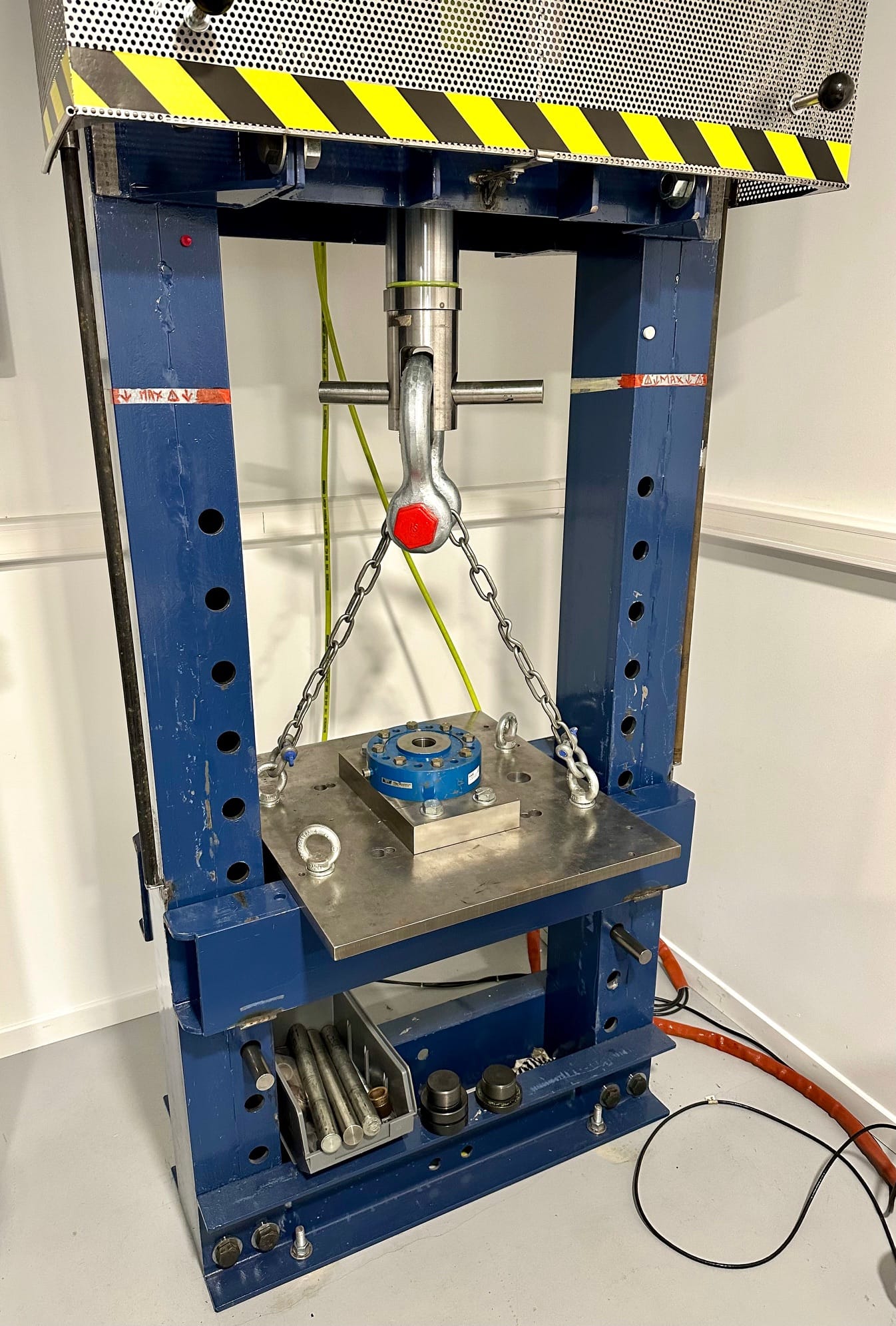
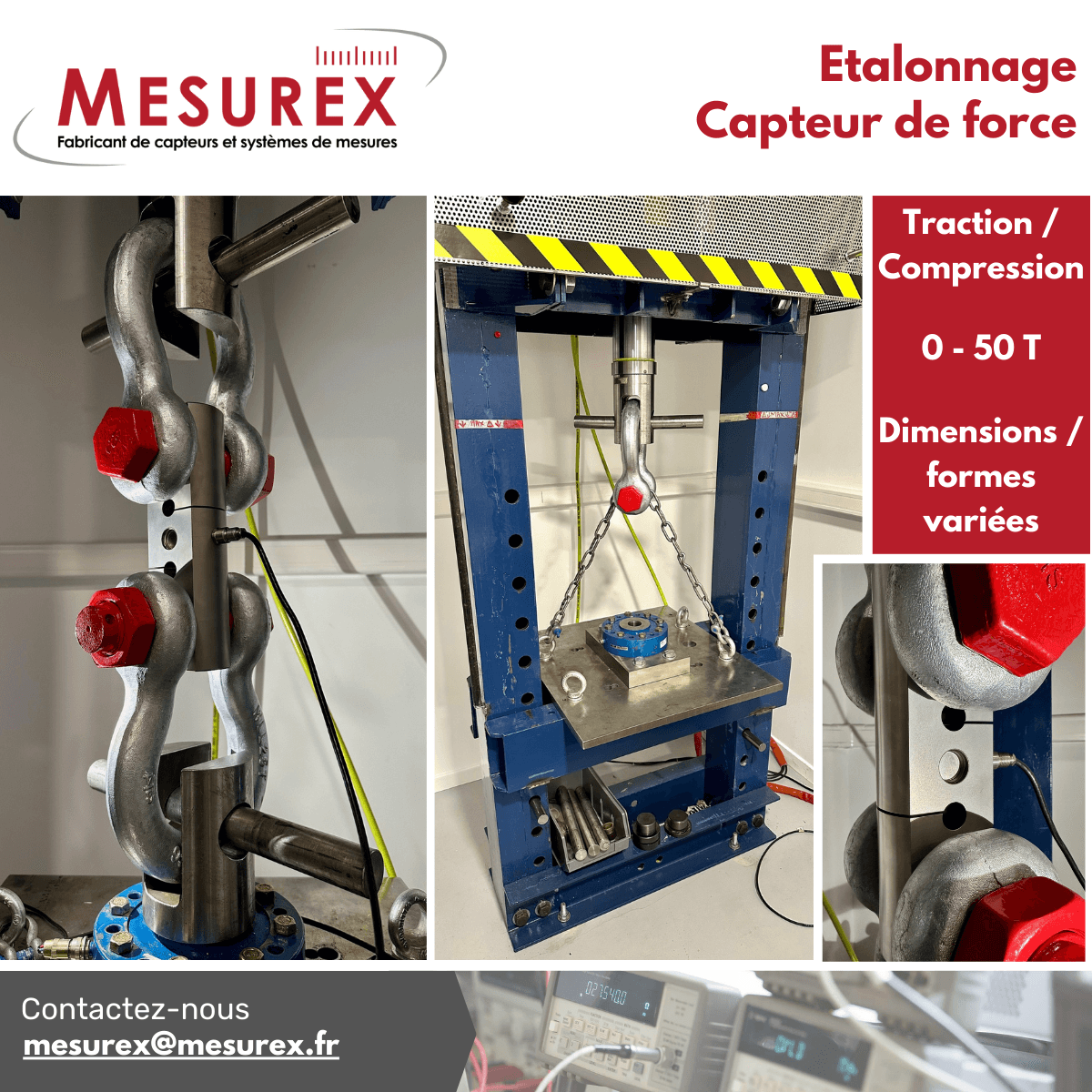
MESUREX's metrology laboratory is equipped with two force benches (up to 450KN and up to 10KN).
Our standard force transducers (10N, 1KN, 10KN, 50KN and 450KN) are regularly sent to a national laboratory for recalibration, in order to ensure their reliability. traceability to the International System of Units.
Do you need reliable, fast and professional force calibration? Contact us now: me*****@*****ex.fr / 01 30 41 23 62
#Capteur #Force #Etalonnage #Traction #Compression
The force formula expresses the inseparable relationship between mass and the acceleration of gravity. It is expressed in Newtons and defines the force required to accelerate a mass of one kilogram to one meter per second squared.
In many industrial, scientific or technical sectors, The accuracy and precision of force measurements is essential for :
- Enhanced safety Calibrated equipment reduces the risk of failure.
- Enhanced reliability Precise measurements avoid costly errors and guarantee product quality.
- Assured compliance ISO certifications and industry standards require traceable calibrations.
- Cost optimization Less waste and fewer repairs thanks to reliable instrumentation.

 Français
  English