


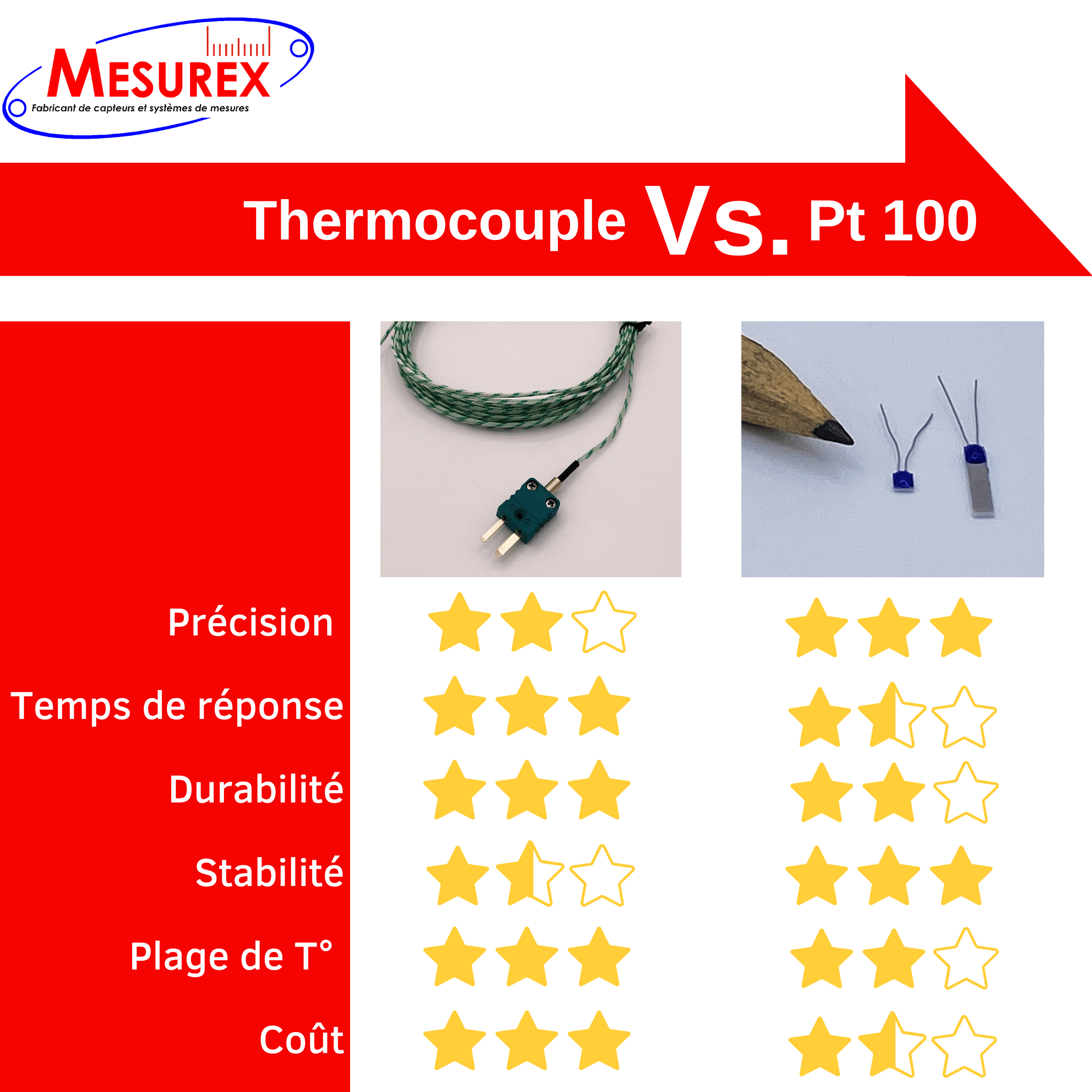
- The Pt100 is a resistive temperature sensor that measures temperature using the electrical resistance of a high-purity platinum wire. The electrical resistance varies with temperature, making it possible to measure temperature. The ohmic value is 100 Ω at 0°C.
Pt100s are accurate and stable over the long term, offering excellent linearity of measurement, This makes them ideal for high-precision temperature measurement applications. However, compared with thermocouples, they are more expensive, more sensitive to electromagnetic interference, have a more limited measuring range, and a slower response time.
In conclusion, the choice between a thermocouple and a Pt100 will depend on the following factors specific needs of YOUR application. To make the right choice, get advice and support from a measurement specialist. For over half a century, MESUREX has specialized in the design & manufacture of custom temperature sensors.
???????????????? ???????????????????????????????????? ???????? ???????????????????????? ???????????????? ???????????? ???????????? ???????????????????????? ???????? ????????????????????????????, ???????????????????????????????????? ???????????????????? ???????????????? ????????????????????://????????????.????????????????????????????.????????/ ???????? ???????????????????????? ???????????????? ???????????????? ???????? ???????????? ???????????????????????????? ????????????????????????????@????????????????????????????.????????
1TP5Sensor 1TP5Measurement 1TP5Precision #hermocouple #Pt100 #RTD 1TP5Automotive 1TP5Aeronautical 1TP5Aerospace 1TP5IndustrialManufacturing
In the field of temperature measurement, the two most commonly used technologies are the thermocouple and the Pt100 (also known as RTD - Resistance Temperature Detectors).
- The thermocouple is a sensor that measures temperature using the difference in electrical voltage generated by two different metals connected together (SEEBECK effect). As the temperature changes, so does the voltage, making it possible to measure temperature.
The advantages of thermocouples are undeniable: low cost, small size, robustness, measurement responsiveness and wide measuring range (download the summary on « How to choose a thermocouple »). They are commonly used in high-temperature applications and harsh environments. However, their accuracy is less than that of Pt100s, and their response can be affected by probe length and connection quality.



 Français
  English